● Detection
Long Island
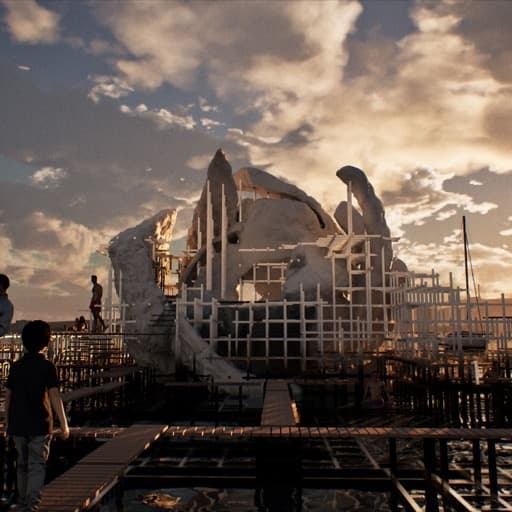
Reimagining coastal resilience — the Long Island project, re-imagined.
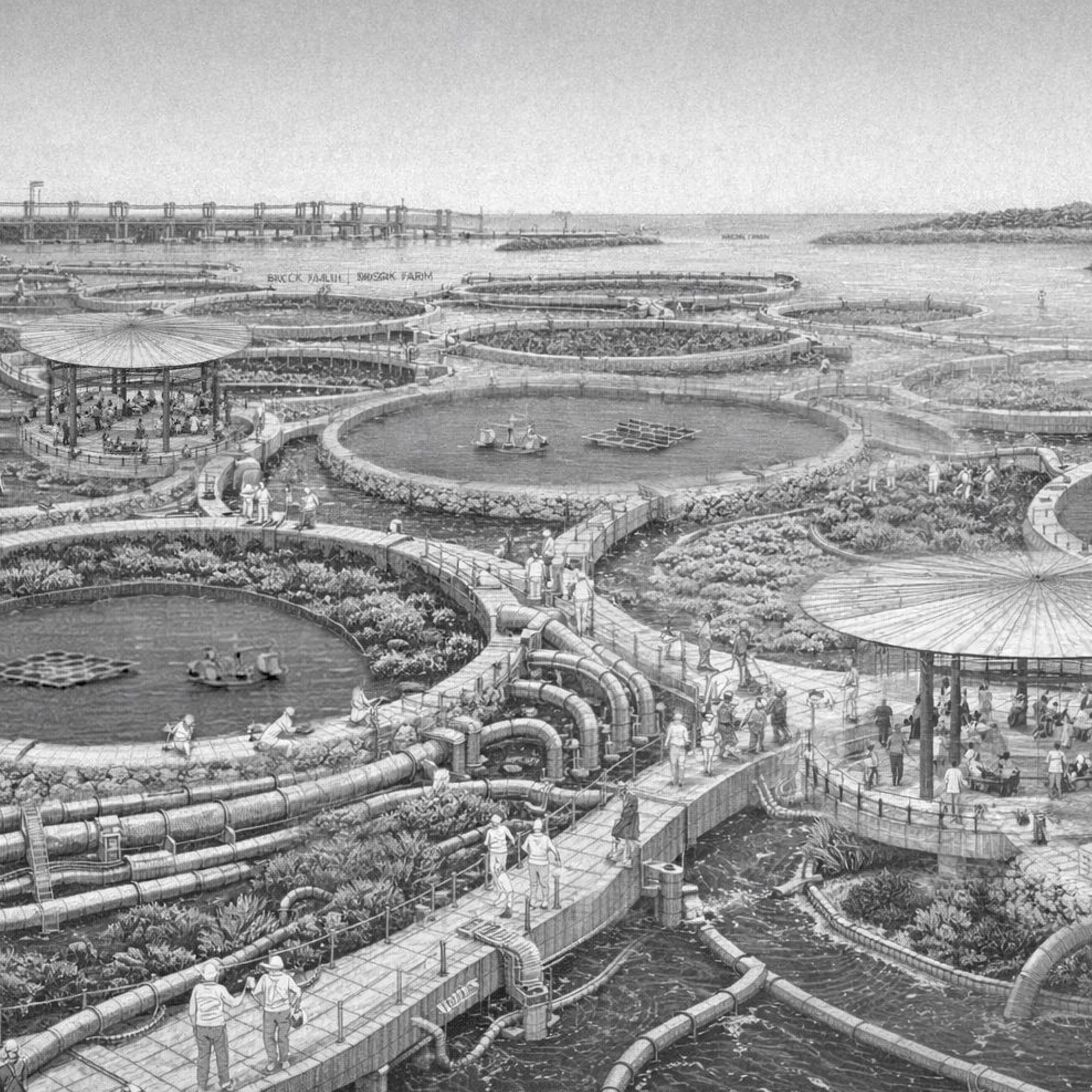
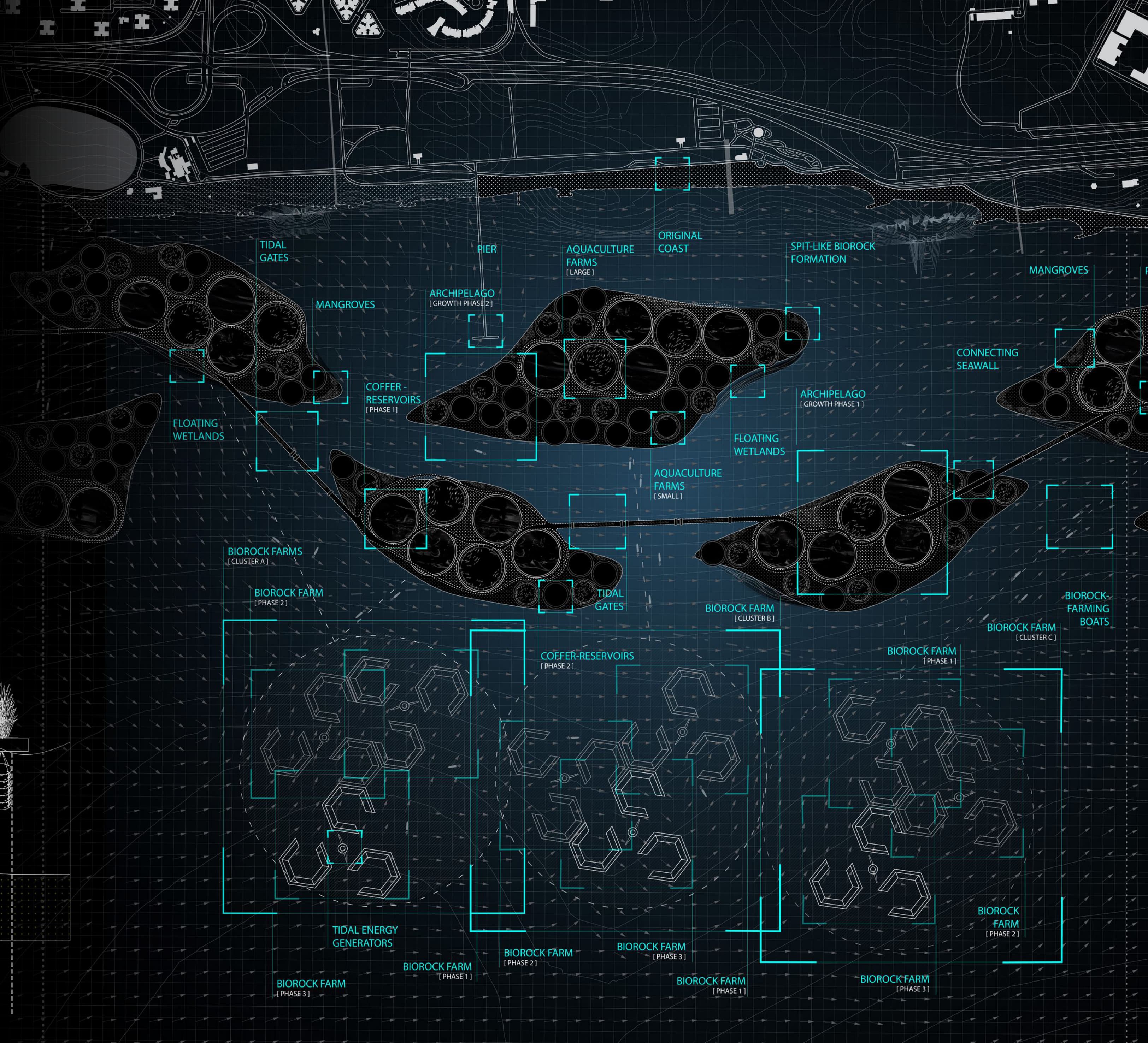
A dynamic, self-sustaining coastal protection and water-harvesting system built through an evolving archipelagic approach. Offshore biorock farms, placed in high-current deep-sea zones, harvest tidal energy to stimulate rapid mineral accretion — producing structural biorock components.
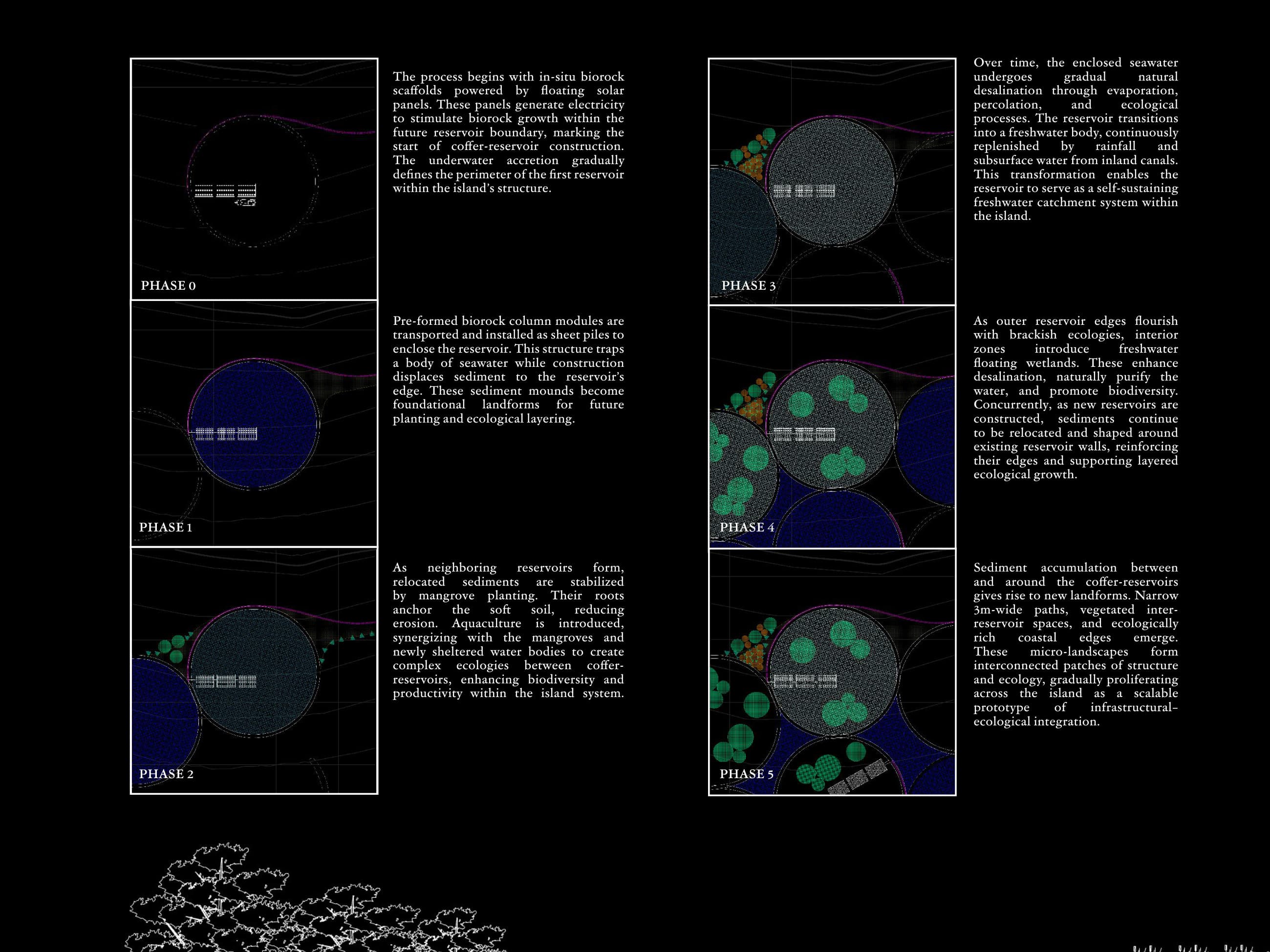
These are transported inland to construct modular biorock embankment walls that enclose coffer-reservoirs: artificial islands designed for natural desalination, slowly turning seawater into usable freshwater. As islands multiply outward in layers, they double as wave dissipators and ecological buffers. Interconnected seawalls and tidal gates form a flexible defense spine, designed to accrete vertically in tandem with rising sea levels.
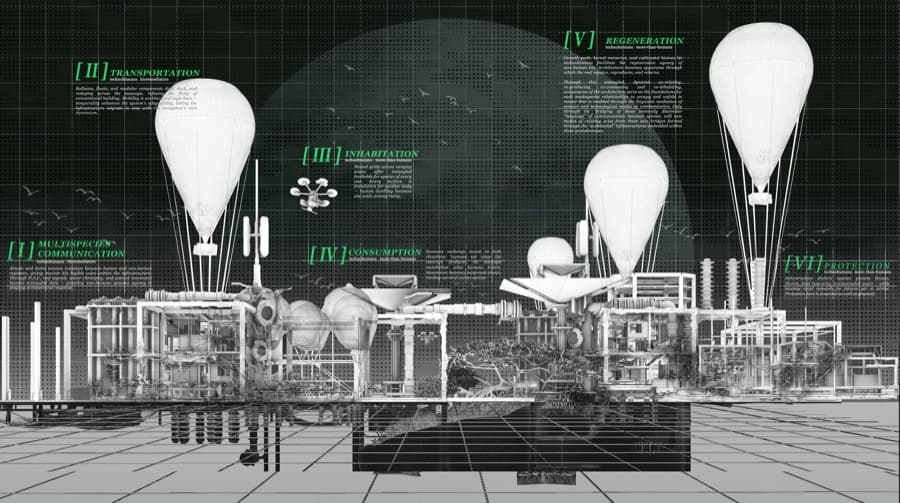
The perpetual seeding of biorock, aquaculture, and vegetation transforms the system into a living, growing machinic landscape — a proto-ecology that redefines coastal resilience as something cultivated rather than walled.
Media & materials